
Marathwada Faces Unprecedented Flooding Amidst Heavy Rains
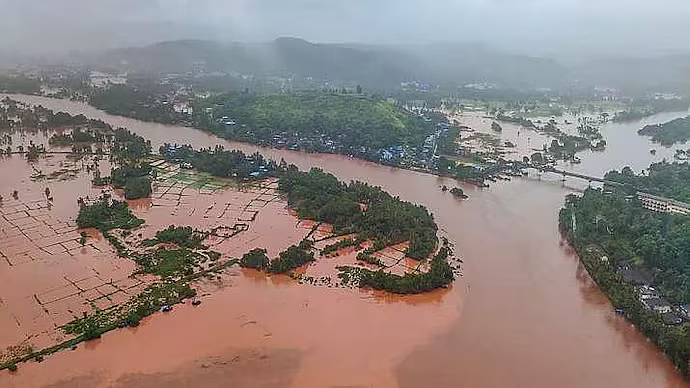
Marathwada, a region in central Maharashtra known more for its parched fields than swollen rivers, is facing a crisis unlike any in recent memory. Traditionally drought-prone, the land that once epitomized scarcity is now reeling under an excess it never prepared for—floods of devastating proportions.
Between September 20 and 27, the skies opened up with a fury. Record-breaking rainfall drenched the region, with Ahmedpur in Latur district receiving 170 mm in just 24 hours, briefly making it the wettest place in India. This wasn’t a blessing for the farms or villages—it was a catastrophe. At least 52 people lost their lives, more than 11,500 were evacuated, and in Solapur alone, 6,500 people sought shelter in relief camps.
This sudden transformation from drought to deluge raises questions far beyond immediate rescue operations. It forces us to examine history, climate patterns, human vulnerability, and the role of technology in shaping a resilient future.
A Region Shaped by Extremes
Marathwada’s story has always been one of extremes. Farmers here are accustomed to erratic monsoon cycles—years of crippling drought punctuated by brief spells of heavy rain. The 2014 drought is still etched in memory, when parched fields forced thousands to migrate. Wells ran dry, and tankers became lifelines.
But what we are witnessing now is not just another swing in the pendulum. It’s a climate shift.
By 2025, Marathwada had already received 887 mm of rainfall since June 1, a staggering 204% above normal. In September alone, it recorded 305 mm, again 204% of the expected figure. Such sustained deviation from historical averages isn’t coincidence—it’s climate change in action.
The region once starved of water now faces the paradox of excess. But abundance, when unregulated and extreme, can be just as destructive as scarcity.
The Climate Connection
So what’s driving this transformation? Scientists point to a combination of factors, all tied to global climate change:
-
Rising Temperatures: Warmer air holds more moisture, leading to sudden cloudbursts and torrential downpours.
-
Monsoon Shifts: The Indian monsoon is withdrawing later, causing prolonged rainfall in September and October.
-
Erratic Distribution: Instead of steady showers spread across months, we’re seeing short, intense bursts that overwhelm the land and rivers.
For Marathwada, this means water stress is no longer about too little, but about too much, too fast, and at the wrong time.
Human and Economic Fallout
The immediate impacts of this year’s floods have been brutal:
-
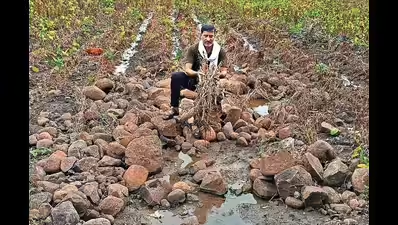
Agriculture in Ruins: More than 6.9 million acres of crops are underwater. Cotton, soybean, tur, sugarcane—entire harvests have been wiped out. For farmers who were just recovering from past droughts, this is another crushing blow.
-
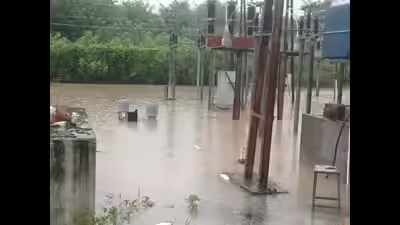
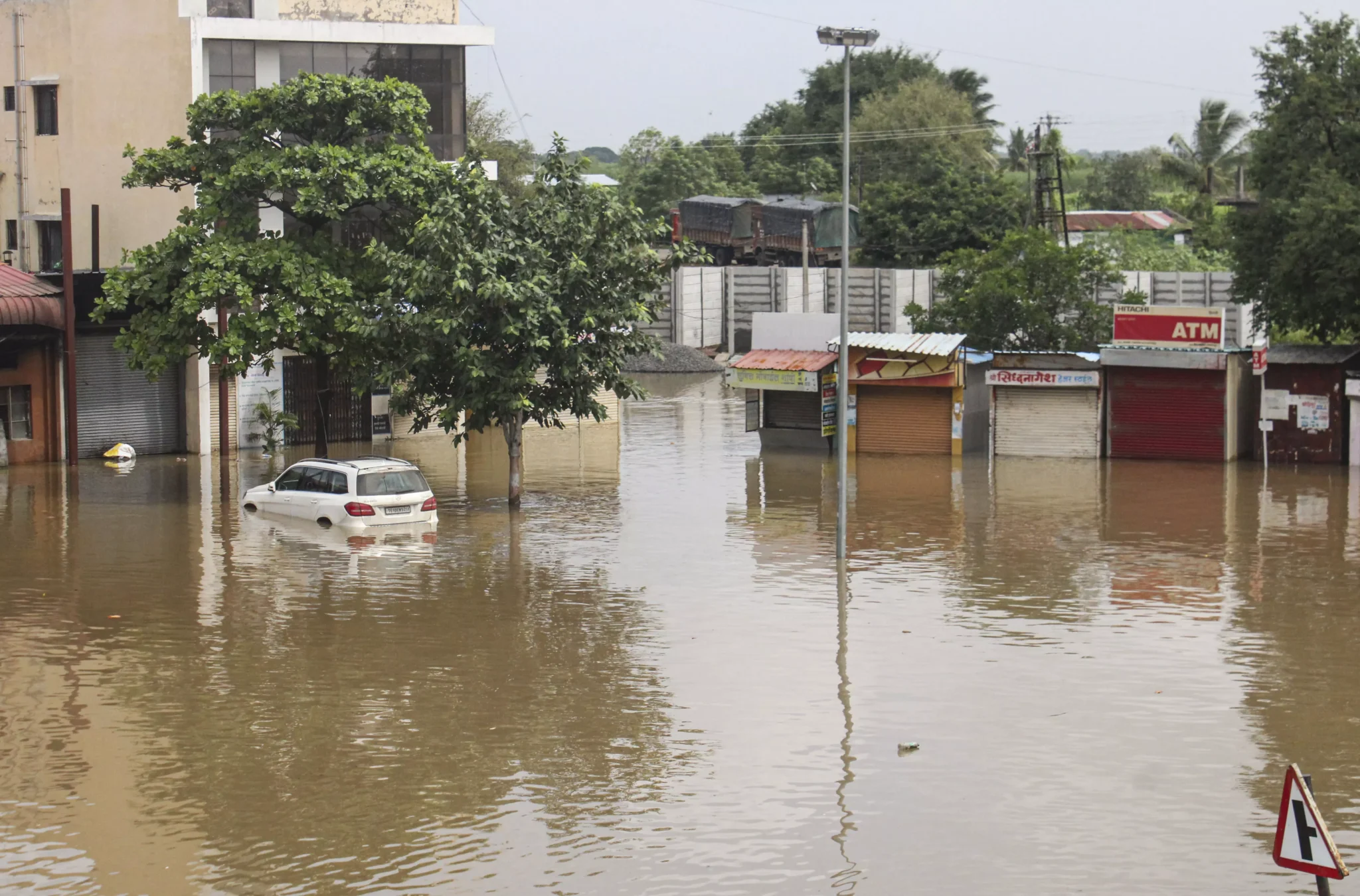
Infrastructure Collapse: Roads are submerged, rail services disrupted, and water pipelines damaged. Relief workers face delays reaching villages cut off by swollen rivers.
-
Public Health Risks: Stagnant water becomes a breeding ground for mosquitoes and bacteria. Outbreaks of malaria, dengue, and cholera loom over relief camps already stretched thin.
But the long-term consequences could be even more severe:
-
Economic Strain: Agriculture is the backbone of Marathwada. With repeated crop losses, farmers are trapped in debt cycles, and local economies face a slowdown.
-
Migration Pressures: When land and livelihoods collapse, people move. Cities like Aurangabad, Pune, and Mumbai could see new waves of climate migrants, straining urban infrastructure.
-
Policy Overhaul: From dam management to urban planning, policymakers will be forced to rethink how resilience is built into every layer of governance.
Technology as a Lifeline
Amidst the despair, the floods also highlight opportunities—particularly for technology and innovation to reshape resilience.
-
Advanced Weather Forecasting
AI-driven platforms can deliver hyper-local, real-time weather predictions. If farmers knew three days in advance that 170 mm of rain was on its way, crop losses could be minimized, and evacuations could be smoother. -
Smart Water Management
IoT-enabled sensors in dams and rivers can monitor water levels continuously. Early warnings could trigger controlled releases, reducing the risk of catastrophic breaches. -
Agricultural Innovation
-
Flood-tolerant seeds: Crops that can survive waterlogging could be game changers.
-
Precision farming: Using drones and data analytics, farmers can track soil health and water use more effectively.
-
Diversification: Encouraging alternative crops and livestock farming can spread risk.
-
-
Disaster Response Tech
From satellite mapping to drone-assisted rescue operations, technology can drastically cut response time in crises.
Marathwada’s struggles may seem local, but the solutions it inspires could have global relevance, especially for regions facing similar climate extremes.
Voices from the Ground
Statistics capture scale, but stories capture reality.
In Latur, farmers who once prayed for rain now watch their fields drown. Relief camp volunteers in Solapur speak of children arriving without shoes, clutching soaked schoolbags. In Osmanabad, women queue for hours not for water but for dry rations.
These stories underscore a cruel irony: communities that have historically borne the brunt of drought now face devastation from floods—proof that climate change rarely offers balance, only volatility.
Policy Imperatives
The crisis in Marathwada is a wake-up call for India’s climate preparedness. Some urgent steps include:
-
Climate-Resilient Infrastructure: Roads, drainage, and buildings need to be designed for both drought and flood extremes.
-
Integrated Water Policies: Moving away from short-term tanker solutions to long-term watershed management.
-
Insurance and Financial Safety Nets: Farmers must be shielded from climate-induced bankruptcy through accessible crop insurance and debt relief mechanisms.
-
Decentralized Governance: Empowering local bodies with technology and funds to respond quickly and effectively.
A Turning Point for Marathwada
Marathwada’s floods are not just another natural disaster—they’re a turning point. They expose the fragile balance between human systems and nature, and the urgent need to rethink resilience.
If this region, once the epicenter of drought, can find ways to harness technology, reimagine agriculture, and build climate-ready infrastructure, it can become a model for adaptation in a warming world.
But failure to act will mean that every monsoon becomes a gamble, every September a season of fear, and every farmer a victim of forces beyond their control.
Conclusion
The floods in Marathwada are a stark reminder: climate change is not a distant future—it is here, reshaping lives, landscapes, and livelihoods. The challenge is immense, but so is the opportunity. By combining science, technology, policy, and community resilience, Marathwada can turn disaster into transformation.
The choice now is whether to treat this crisis as a tragedy to endure—or a lesson to act upon.